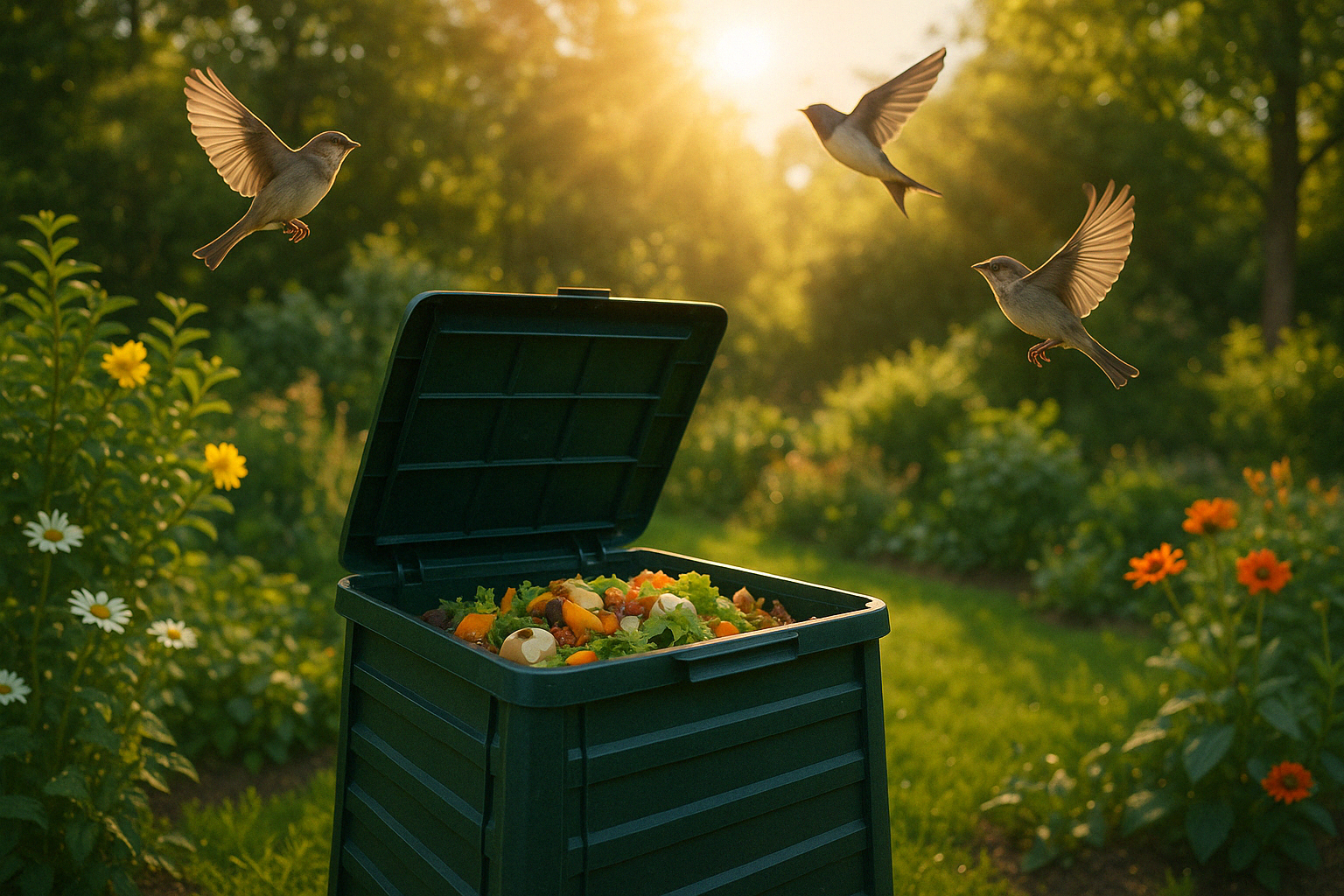
Composting is one of the most impactful ways to reduce waste, feed your soil, and grow healthier plants—all from the comfort of your home. Whether you live in a small apartment or have a sprawling backyard, composting is doable, sustainable, and surprisingly fun.
Ready to turn your scraps into soil? This is your ultimate guide to composting at home—what it is, how it works, and how to do it right.
🌱 What is Composting?
Composting is the natural process of breaking down organic materials—like food scraps, garden clippings, and paper waste—into nutrient-rich compost. It mimics nature’s own recycling system, turning “waste” into humus, the dark, crumbly material that improves soil health and helps plants thrive.
🧪 How Composting Works: The Science Behind It
Composting relies on four essential ingredients:
- Greens (Nitrogen) – moist, fresh materials like veggie scraps and coffee grounds
- Browns (Carbon) – dry, fibrous materials like leaves, cardboard, and paper
- Air (Oxygen) – allows aerobic bacteria to break down materials quickly
- Moisture (Water) – keeps microbes active, but not waterlogged
Together, these elements fuel microbial life that decomposes the organic matter into compost.
🧺 What You Can & Can’t Compost
✅ Compost These:
- Fruit and veggie peels
- Coffee grounds and filters
- Tea leaves (without plastic bags)
- Crushed eggshells
- Leaves and grass clippings
- Cardboard (shredded)
- Paper towels and napkins (unbleached)
- Sawdust (from untreated wood)
❌ Avoid These:
- Meat, dairy, and bones (attract pests)
- Oily or greasy food scraps
- Synthetic materials (plastics, coated papers)
- Pet waste (contains pathogens)
- Diseased plants or invasive weeds
🔄 Types of Home Composting Systems
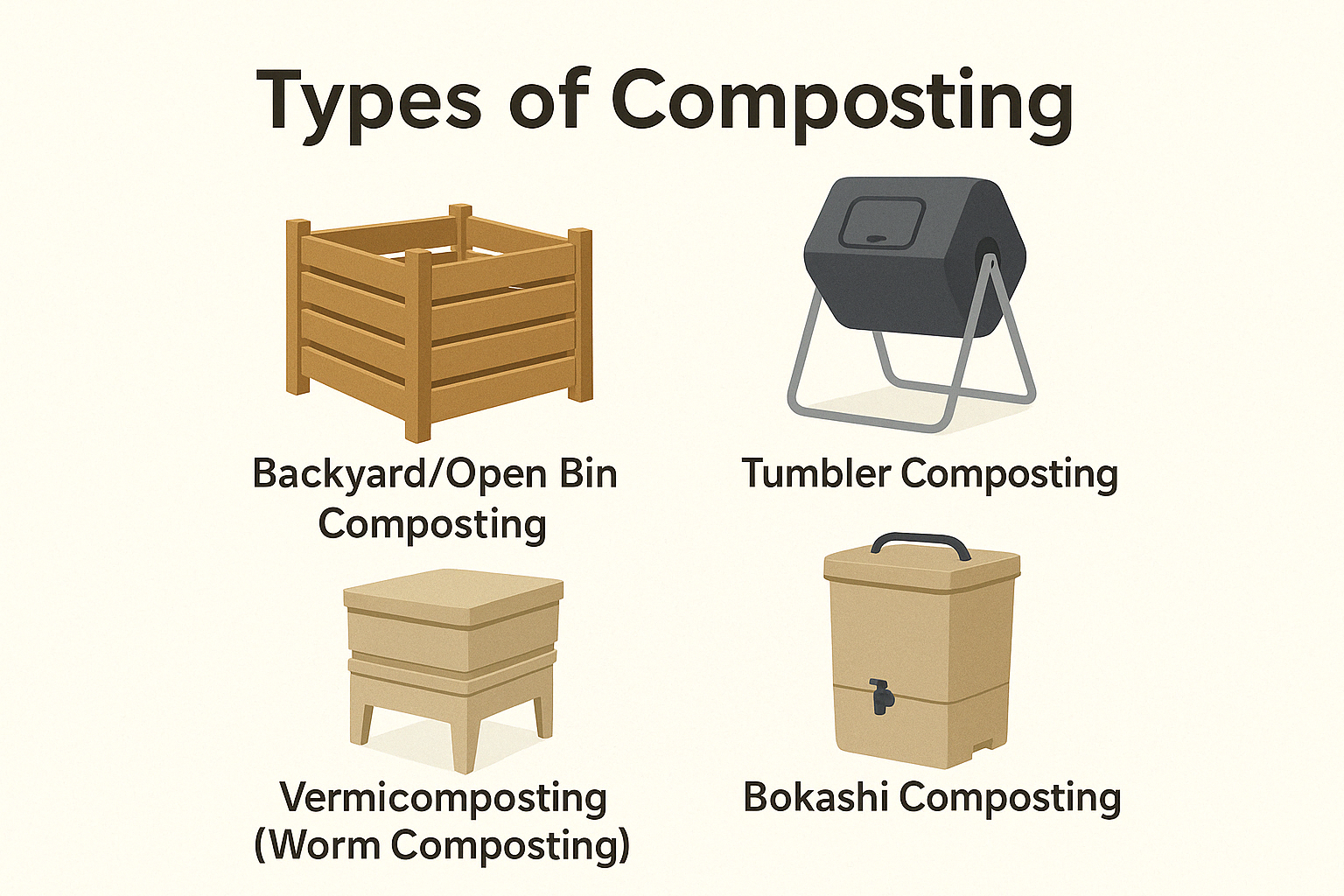
1. Backyard/Open Bin Composting
- Great for: medium to large gardens
- Needs: a bin, corner, or open pile
- Pros: low-cost, simple, natural
2. Tumbler Composting
- Great for: patios or quick composting
- Pros: clean, easy to turn, speeds up decomposition
3. Vermicomposting (Worm Composting)
- Great for: indoor or small spaces
- Uses: red wigglers to convert scraps into worm castings
- Pros: odorless, fun, efficient
4. Bokashi Composting
- A fermentation method that pre-composts food waste (including meat/dairy)
- Needs: Bokashi bin and bran
- Follow-up: bury in soil or compost bin to finish
🌡️ Composting Step-by-Step
- Choose your method and set up your bin
- Start with a layer of browns (e.g. leaves or cardboard)
- Add your greens (e.g. veggie scraps)
- Mix layers and moisten slightly
- Turn or stir regularly to add oxygen
- Monitor for heat, moisture, and smell
Ready compost looks dark, crumbly, and earthy—it takes 2–12 weeks depending on the method.
⚠️ Common Composting Problems (and Fixes)
- Bad smell? Too wet or too many greens → Add more browns and turn it
- Too dry? Compost isn’t breaking down → Add water or more greens
- Attracting pests? Avoid food like bread/meat and always cover fresh scraps
- Slow composting? Turn more often and chop materials smaller
🌿 How to Use Your Compost
- Mix into garden beds or potting soil
- Spread as mulch around trees and veggies
- Brew into compost tea for a liquid fertilizer
- Add to seed trays and containers for extra nutrients
Tip: Even indoor plants love a little compost boost!
🌍 Why Composting Matters
By composting, you’re not just helping your garden—you’re helping the planet:
- Reduces landfill waste
- Lowers methane emissions
- Supports a circular lifestyle
- Empowers self-sufficiency
Small changes = big impact.
📬 Keep Growing
Want more eco-friendly garden tips, compost hacks, and plant care guides?
Subscribe to our newsletter and join a growing community of nature lovers, one compost bin at a time.


No comment