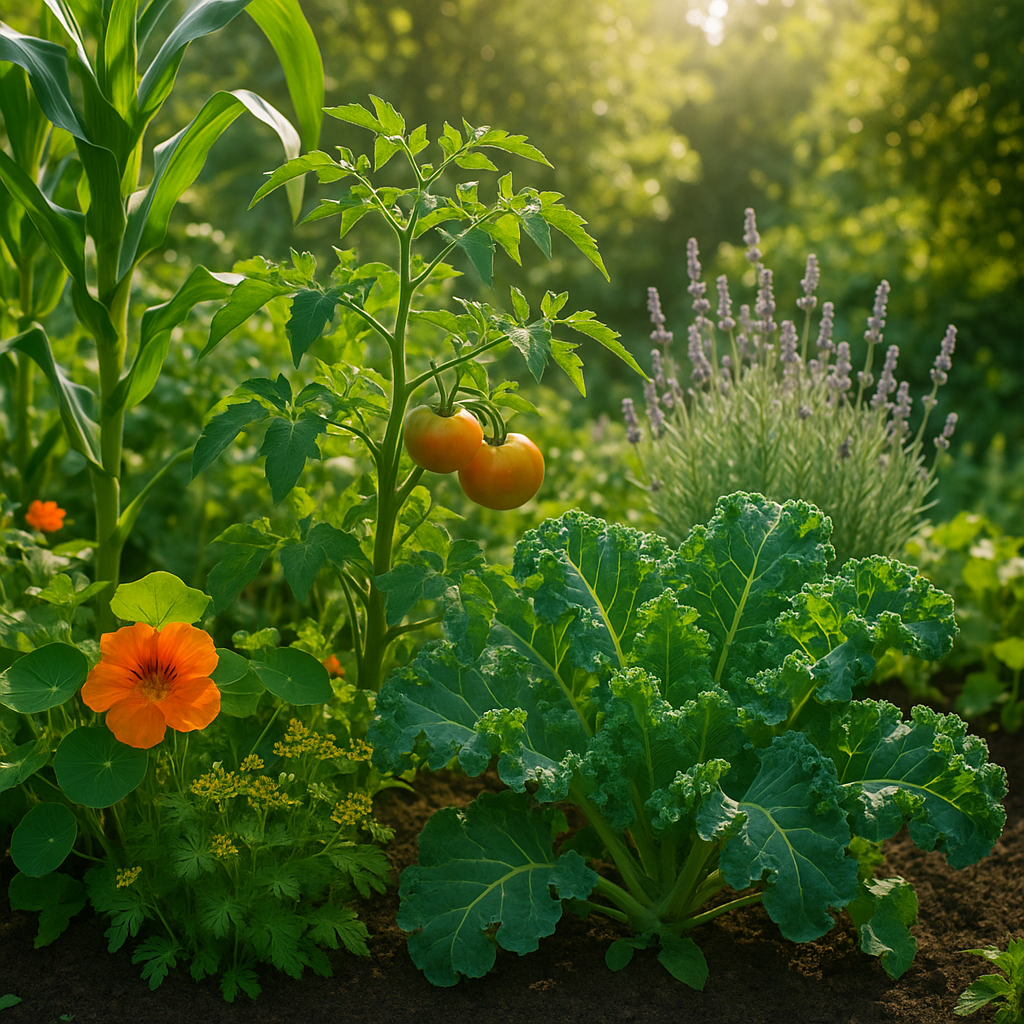
Ever wish your plants could help each other out? Well, they can—and it’s called companion planting. This age-old gardening method pairs plants that naturally support one another, improving growth, repelling pests, and enhancing overall garden health.
Whether you’re growing herbs, veggies, or flowers, learning which plants thrive together can make a big difference in your harvest and reduce the need for chemicals or interventions.
🌱 What is Companion Planting?
Companion planting is the practice of growing specific plants side by side to benefit one or both. Some combinations improve nutrient uptake, deter pests, attract pollinators, or even improve flavour.
It’s nature’s version of teamwork—and when done right, your garden becomes healthier, more resilient, and more productive.
🧄 Classic Companion Plant Combos
Here are some tried-and-true pairings that work beautifully in most home gardens:
1. Tomatoes + Basil
- Basil repels pests like aphids and whiteflies
- Believed to enhance tomato flavour
- Also attracts pollinators
2. Carrots + Onions
- Onions deter carrot flies
- Carrots help loosen soil around onions
3. Cabbage + Dill
- Dill attracts beneficial insects like ladybirds and wasps
- Helps control cabbage worms naturally
4. Corn + Beans + Squash (The Three Sisters)
- Corn provides a trellis for beans
- Beans fix nitrogen in the soil
- Squash shades the soil, retaining moisture and suppressing weeds
5. Lettuce + Radishes
- Radishes grow fast and break up soil for slower-growing lettuce
- Radishes distract leaf-eating pests from lettuce
🐞 How Companion Plants Help
- Repel pests naturally – e.g. marigolds with almost anything!
- Improve soil fertility – legumes like peas and beans fix nitrogen
- Provide shade or structure – tall plants support or shelter smaller ones
- Attract beneficial insects – flowers like nasturtiums, yarrow, and alyssum invite pollinators and pest predators
🚫 Bad Neighbours: Plants That Don’t Get Along
Not all plants are good friends. Here are a few combinations to avoid:
- Onions + Beans – Onions may stunt bean growth
- Tomatoes + Corn – Compete for nutrients and attract similar pests
- Potatoes + Tomatoes – Increase the risk of blight spreading
- Carrots + Dill – Dill can stunt carrot growth if too close
Spacing and variety matter, so always check companion planting guides for your specific crop type.
🌸 Companion Flowers to Consider
Flowers aren’t just pretty—they’re powerful helpers in your veggie garden too!
- Marigolds – Deter nematodes and aphids
- Nasturtiums – Act as a trap crop for aphids
- Calendula – Attracts pollinators and repels pests
- Borage – Encourages healthy tomato and strawberry growth



No comment