
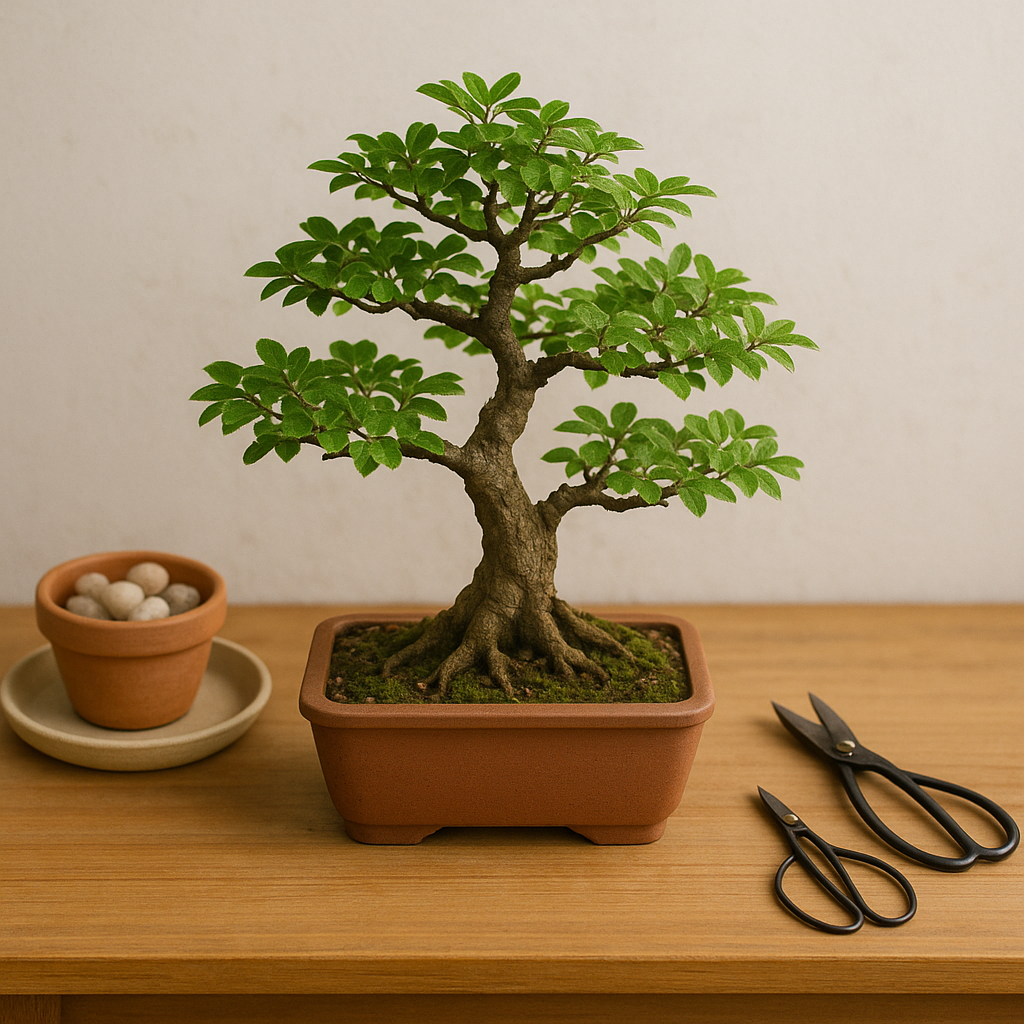
Bonsai is more than just a miniature tree in a pot—it’s a living art form, a slow, thoughtful journey, and a lesson in patience, mindfulness, and beauty. Rooted in ancient Japanese tradition (influenced originally by Chinese penjing), bonsai is the practice of growing and shaping trees to look like mature, full-sized trees in miniature.
In this guide, we’ll break down everything a beginner needs to know—from choosing your first bonsai to shaping techniques, care, styling, and long-term growth.
🌿 What is Bonsai?
Bonsai (盆栽) means “plant in a tray” in Japanese. It’s not a species of plant—it’s a method of growing and training trees in containers while carefully shaping their appearance over time.
The purpose of bonsai is to create a realistic representation of nature—a tree that tells a story—using horticultural techniques and artistic vision.
It combines:
- Art – The visual design and emotional expression of the tree
- Science – Understanding plant health, growth patterns, and seasonal needs
- Philosophy – A practice of patience, simplicity, and connection to nature
🌱 The Best Bonsai Trees for Beginners
Choose hardy, forgiving species that tolerate pruning and adapt well to pot life.
✅ Top Beginner Bonsai Choices (South Africa-friendly):
- Ficus (Ficus retusa or Ficus benjamina) – Great indoors, thrives in warm climates
- Jade Plant (Portulacaria afra) – A drought-tolerant, low-maintenance bonsai native to SA
- Chinese Elm (Ulmus parvifolia) – Robust and responds well to training
- Juniper (Juniperus spp.) – Outdoor favorite with classic bonsai look
- Boxwood (Buxus spp.) – Compact foliage and easy shaping
- Bougainvillea (in warmer regions) – Adds vibrant flowers and is surprisingly bonsai-friendly
🪴 Choosing Your First Bonsai Tree
You have two options:
- Buy a pre-trained bonsai – Faster, aesthetic results but more expensive
- Start with nursery stock or a sapling – More rewarding but takes patience to shape
What to look for:
- A healthy trunk with some character (thickness, movement)
- Compact, healthy leaves
- A strong root base (nebari), even if not visible yet
- No signs of pests, fungal spots, or weak branches
🧰 Essential Bonsai Tools & Supplies
Starting out, you don’t need professional gear, but here are your essentials:
- Bonsai shears/scissors – For precise pruning
- Concave cutter – For clean branch removal
- Wire (aluminum or copper) – For branch training
- Bonsai soil mix – Well-draining and gritty
- Bonsai pot – Shallow, with drainage holes
- Chopstick or root rake – For gentle root separation
- Watering can with fine nozzle – For gentle watering
✂️ Bonsai Techniques Explained
1. Pruning
Removes unwanted growth and shapes the canopy.
- Structural pruning: Done in late winter or early spring to shape the tree
- Maintenance pruning: Done throughout the growing season to keep form
2. Wiring
Used to bend and position branches. Apply wire at a 45° angle and remove it before it digs into the bark.
3. Root Pruning & Repotting
Done every 1–3 years. Trim roots to keep the tree miniature and healthy, refresh soil, and check for disease.
4. Defoliation (optional)
Removing leaves to encourage smaller growth—best done on tropical species in summer only.
💧 Bonsai Care 101
🌞 Light:
- Outdoor trees: Full to partial sun (Juniper, Elm, Bougainvillea)
- Indoor trees: Bright, indirect light near windows (Ficus, Jade)
💧 Watering:
- Water when the topsoil feels slightly dry
- Avoid letting soil dry completely
- Water deeply until it drains from the bottom
🌡️ Temperature:
- Protect from frost (especially for indoor or tropical species)
- Most bonsai don’t like sudden temperature changes
🍃 Feeding:
- Use balanced, slow-release fertilizer every 2–4 weeks in the growing season (spring to early autumn)
- Ease off feeding in winter when the tree is semi-dormant
🌳 Styling Your Bonsai
There are many traditional styles to explore:
- Formal Upright (Chokkan) – Straight trunk, symmetrical branches
- Informal Upright (Moyogi) – Gentle curves, asymmetry
- Cascade (Kengai) – Tree grows downward, like on a cliff
- Windswept (Fukinagashi) – All branches leaning in one direction
- Broom (Hokidachi) – Round, full canopy like a shade tree
🌱 As a beginner, start simple. Let the tree’s natural shape guide you.
🧘♂️ The Philosophy of Bonsai
Bonsai is a long-term relationship, not a quick result. It teaches:
- Patience – Growth takes time
- Observation – Noticing small changes in your plant
- Balance – Between control and letting nature do its thing
Caring for bonsai brings a sense of calm and presence into your daily life.
❓ Common Beginner Mistakes
- Overwatering – Most bonsai prefer to dry slightly between watering
- Wrong light – Light needs vary by species—know your tree!
- Neglecting root care – Without repotting, your tree may become root-bound
- Pruning too much too soon – Give the tree time to establish
- Skipping research – Each species has its quirks—read up before styling


No comment